
Jane Birkin-ify Your Bag: I Shop, Therefore I am
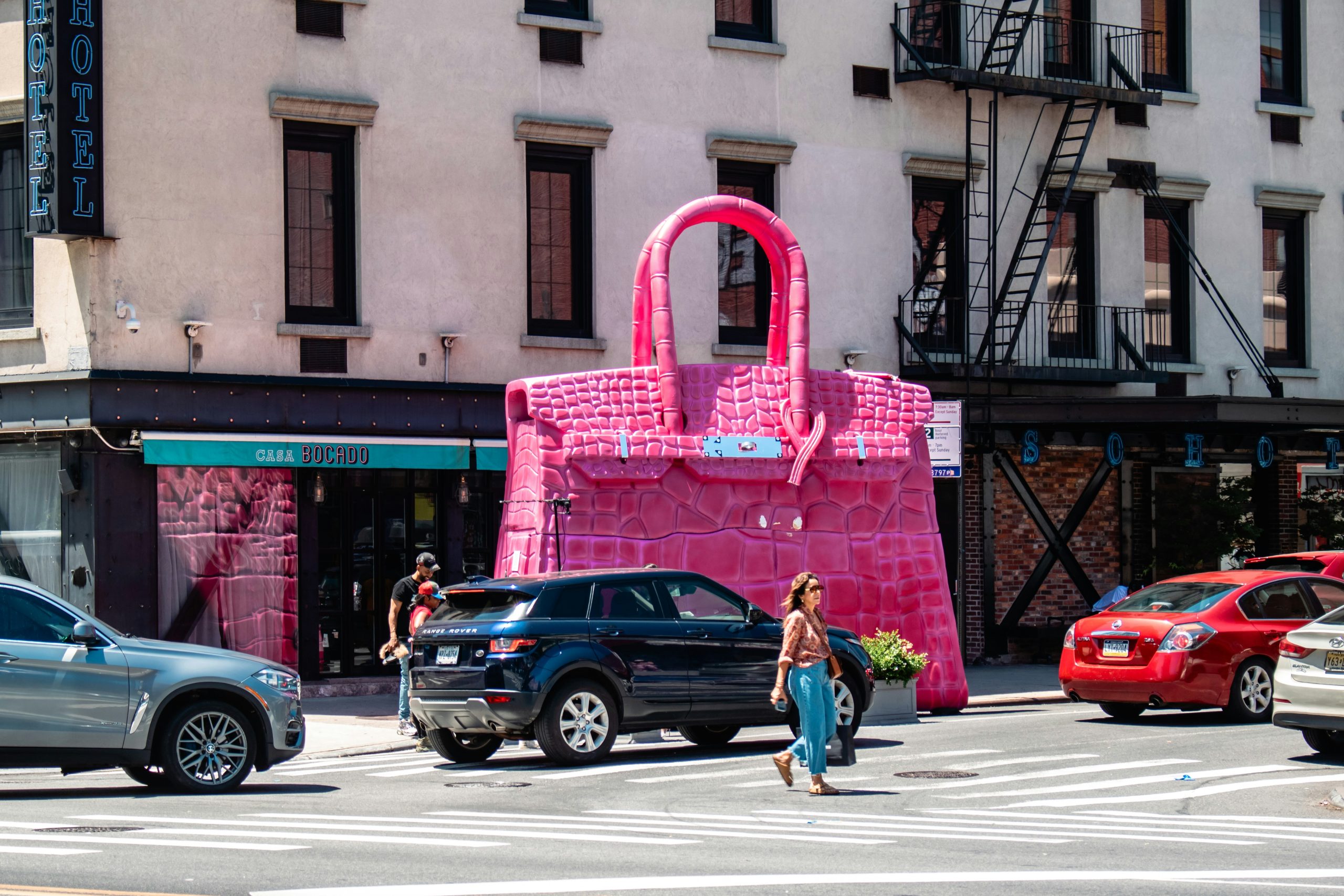
When Personal Style Becomes a Purchasable Trend
Jane Birkin, the British-born actress and singer who became a French cultural icon, unintentionally sparked a fashion trend that exemplifies the complex relationship between personal style and consumer culture. In the 1980s, an encounter with Hermès CEO Jean-Louis Dumas led to the creation of the now iconic Birkin bag, originally designed to meet her practical needs as a young mother. What began as a functional accessory soon transformed into a symbol of luxury and status, with waiting lists spanning years and prices reaching astronomical heights.
Ironically, Birkin’s attitude toward the bag named after her was very different from its eventual commodification. She was known for “mistreating” her Birkins, wearing them out, stretching them, and decorating them with charms and trinkets. This personal touch, dubbed “Jane Birkin-ifying,” has recently inspired a trend on social media platforms like TikTok, where users customize their own bags with an array of accessories.
The rise of consumable identities
In today’s globalized world, there is increasing pressure to see ourselves as part of a global community rather than just a single country. This shift has led to a crisis of identity. The classical means of self-definition such as ethnicity, occupation, or religion seem to be less relevant now, and we are left with defining ourselves based on our tastes and preferences, often through the brands we choose to consume. Capitalism has played a significant role in this transformation, stripping us of our community, purpose, and sense of self, and we are left to fill that void with consumable identities. The self-branding phenomenon has led to people seeing themselves as products. This has caused a loss of spirituality and depth, because like any product under capitalism that can be broken apart and mass-produced, it inevitably becomes boring, uniform, and soulless.
The death of personal style
In this era of obsessive trend cycles, fast-paced content, and consumerism, personal style and collections are becoming more and more impersonal. What once reflected one’s individuality and passions has turned into a competitive homogenized pursuit, losing its unique qualities. No one is immune to the influence of trends. Collecting, once a deeply personal act, has become commodified. The value of objects is no longer tied to individual passions but to their status and identity signaling. People now decorate their bags with mass-produced objects from fast fashion shops like Shein, prioritizing poorly made and meaningless pieces over personal souvenirs or gifts. On top of that, every few weeks, a new aesthetic takes over TikTok, from “pink pilates princess” to “mob wife.” These trends often don’t have any deeper meaning, and their only common feature is their virality on the app. According to Madeleine Schulz, “You can tell someone’s screen time from their outfit,” referring to how many TikTok clothing trends a person is wearing. These aesthetics put a huge emphasis on products over developing and connecting to your own self and personal traits. They offer young adults a wide selection of pre-packaged personalities that can be bought and returned when they are no longer popular. This is very different in comparison to aesthetics like punk rock, whose history had deeper meanings of anti-establishment and a cultural significance of the 70s music genre. In addition, a 2023 survey revealed that 91% of 18-24 year-olds report being stressed, compared to 84% on average. This may explain why Gen Z is drawn to idealized images of having a perfectly organized life. However, the real way to form a healthy self-concept is not by buying a bunch of products that you don’t need, it’s by embracing your uniqueness and maintaining a balanced perspective on your personal qualities.
The bigger picture
This change in how we take part in personal style and hobbies might seem small but it’s representative of a larger issue. It affects how people engage with and appreciate art and creativity. We are not taking our time to just be anymore. We are too focused on building our identity instead of experiencing things as they should be experienced. Everything has become too fast-paced, leaving little room for genuine self-expression and personal growth. In conclusion, while trends and aesthetics will always play a role in fashion and personal style, it’s crucial to remember the words of style icon Alexa Chung: “Good style is a byproduct of a compelling personality“. True personal style should be an authentic expression of oneself, rather than a collection of purchased trends.