
This is what happens when a city becomes a brand
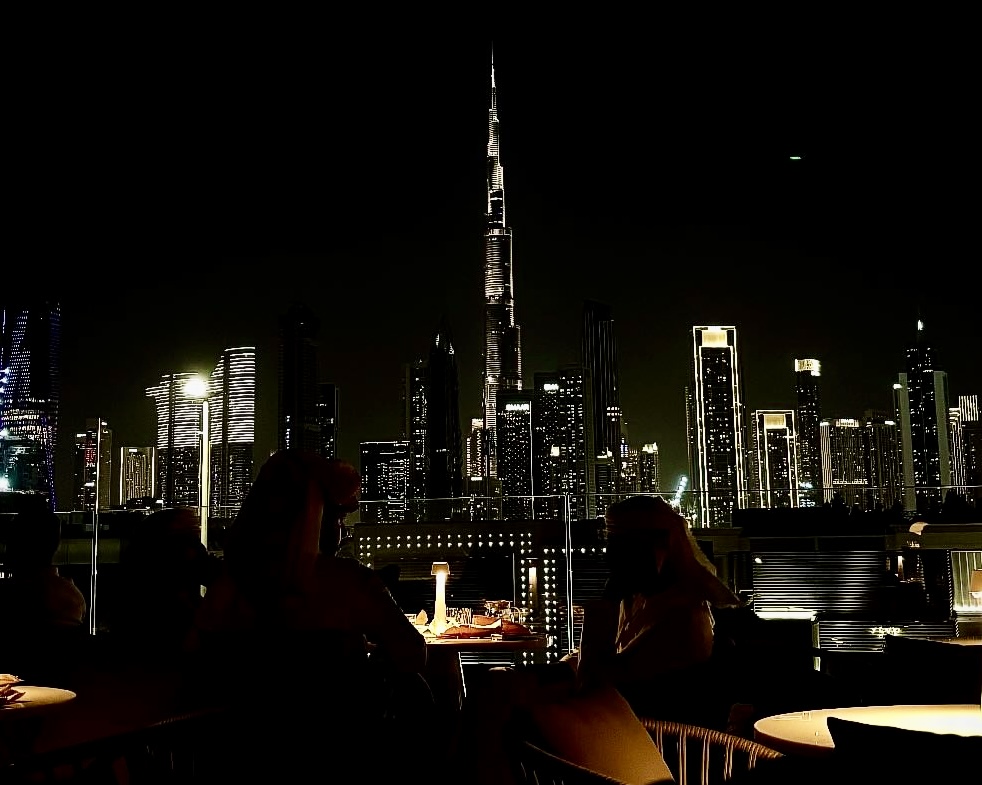
Every week or so, a new TikTok decides that Dubai is the final boss of late-stage capitalism. You know the ones: sped-up footage of endless towers, self-driving police cars, influencers balancing an Hermès bag in one hand and an iced latte in the other aboard some yacht in the Marina. Or the inverse: exposés labelling the city a dystopian playground built on exploitation. The internet can’t seem to decide, is Dubai a luxury fever dream or an episode of Black Mirror? A shiny oasis or a moral blackhole?
As someone who lived in Dubai for nearly a decade, these narratives feel less shocking than they do overly simplistic. They rarely engage with the city as an actual place. Instead, Dubai is portrayed not as a place with contradictions and nuance, but as a metaphor, either for everything wrong with capitalism or everything right with ambition and development. The internet loves to frame the city in extremes, but rarely stops to ask why Dubai looks the way it does or who’s shaping that image in the first place.
Take influencers, for instance. Spend five minutes online and you’ll see the standard Dubai aesthetic: beach clubs, infinity pools, luxury cafés… But what most people don’t realize is that influencing in the UAE has become a state-regulated profession. Since 2018, social media influencers in the UAE have been legally required to obtain a license to post paid content, turning the job into a semi-official role. This license costs around 4000 euros and must be renewed yearly or else you risk being fined. There’s also a whole list of do’s and don’ts. Stray too far outside the invisible lines by mentioning politics, religion, or anything remotely controversial, and you risk fines or even deportation. So when people ask why influencers in Dubai all post the same sanitized content of desert drone shots and brunches, that’s not just the algorithm, that’s policy. It’s part of a national image strategy. Influencers operate like soft ambassadors, knowingly or not, by only showcasing the city’s most appealing aspects. Additionally, Dubai is a very young city and is still in the process of defining itself on the global stage. Fifteen years ago, barely anyone was talking about it, and now it’s a trending destination partly thanks to this kind of curated exposure. Even viral moments, like the recent “Dubai chocolate” trend, end up functioning as soft power tools, casual yet powerful promotions that shape how the world sees the city.
Still, that doesn’t mean everything you see is manufactured or deceptive. That’s the part online discourse tends to skip: people actually live in this city. Not everyone is a tech bro on a yacht or an exploited worker. The reality is far more mundane. For many, living there means long commutes, after school traffic, overpriced groceries, going to the beach on the weekends and taking late-night walks through brightly lit neighborhoods that are half construction site, half suburb. In addition, one of the most tangible features of daily life is the sense of safety. It’s common to leave your phone on a café table, your bag on a beach chair, or your car running outside a shop, and come back to find everything untouched. That kind of everyday security, especially for women and young girls, isn’t just a privilege; it’s a rarity. And it often only becomes obvious once you’ve lived elsewhere.
However, beneath this surface lies a complex system. Public life is highly regulated, and the line between feeling secure and being watched can get blurry. For many residents, this just becomes part of the norm: you learn what not to post, what not to say, when to stay quiet. It’s not oppressive, but it is something everyone adapts to. On the other hand, the kafala sponsorship system, which governs migrant workers, remains a contentious issue. Reforms have been introduced to improve labor protections such as a national bill that provides migrant domestic workers with the same labour protections as other UAE employees. However, challenges still persist, mainly due to the structural power imbalance which continues to tie workers’ legal status to their employers.
Ultimately, the binary narratives surrounding Dubai as either a utopia or dystopia reveal more about the ideological needs of external observers to fit every country into a certain category than about the city itself. These portrayals flatten a complex, highly engineered society into digestible content, overlooking the mechanisms of regulation, state image-making, and the lived experiences of its residents. Rather than asking whether Dubai is “real” or “fake,” we might ask why we continue to demand ideological clarity from a place that is deliberately designed to resist it.