
The cost of the sun disappearing
The rays of the sun are far more than a simple provider of Vitamin D; they are there to pick you up after your worst shifts at work, or when you’ve failed an exam. Nonetheless, we regard them as nothing essential- only a source of heat. Yet that warmth provides us with a reason to smile when we walk out the door. Hence, once those rays become consistently less visible, our skin begins to pale, and our attitude harshens. Some suffer from the loss of consistent sunlight more than others, and they often end up experiencing a phenomenon referred to as seasonal depression.
Seasonal depression in the medical field is referred to as “seasonal affective disorder”. SAD is a type of depression that often occurs during the wintertime in the western hemisphere. Symptoms of it include a persistent low mood, a loss of interest in everyday activities, and a higher likelihood of being irritated. While the medical world has managed to understand the symptoms from which to derive someone suffering from SAD, the causes remain unclear.
SAD is often linked to reduced exposure to sunlight during the winter days. A lack of sunlight disrupts the hypothalamus’s functioning. Ever wondered why the average person during winter craves to spend the day on the sofa with a cup of hot chocolate and watch a film? The reason is the increased levels of melatonin. Equally, a lack of sunlight may lead to lower serotonin levels, leading to a decreased appetite. Depending on your genes, you’re more or less likely to experience SAD. Moreover, it is important to note that every person during winter feels less productive, which does not automatically translate into you having SAD.
What I believe to be significant about SAD is that the risk of developing it increases with age, and women are affected more often than men. However, when you buy yourself a special lamp called “light box” that simulates exposure to sunlight, you’ll be laughed at, and when you insist on taking a daily walk to achieve exposure to as much natural light as possible, you’ll be called oversensitive, unable to deal with the seasons changing. In reality, both of these coping mechanisms are even prescribed by General Practitioners if you struggle with SAD.
Additionally, these types of mental health concerns are not discussed enough for you to take them into account when you decide where to go to university. In a British sixth form, you often get told to look for the universities with the highest ranking. Perhaps in other Western European countries, there is a greater emphasis on taking into account which university is known for your discipline. Nonetheless, never once are you asked to check the weather conditions of your destination country or city. But what if I told you that it should be the defining criterion?
No matter how long the University of Oxford (UoO) continues to be ranked number 1 worldwide by the Times Higher Education, if you struggle in saturated and dark environments, Oxford as a city will be your downfall. According to the School of Geography and the Environment at Uoo, rainfall on average occurs 166 days per year. That is 5 and a half months. Essentially, it means rain falling every day for a semester. 1 of the 2 semesters that you’ll be completing every year. Furthermore, the average annual sunshine duration is 1612 hours, about 36% of the possible duration of daylight at this latitude. Consequently, before applying to the most competitive university in the world, consider whether it will make you happy or whether you’ll just be stuck in an environment where you’re more likely to experience symptoms of SAD.
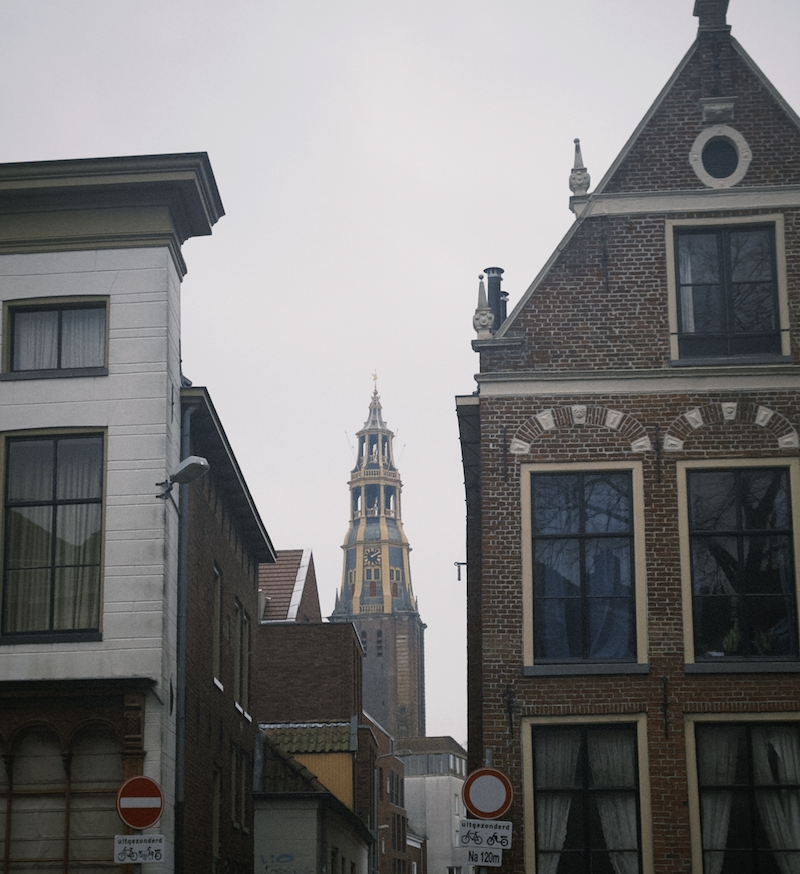
On a more personal level, I did not realise that studying in the Netherlands would mean essentially not seeing the sun from October to April. It is no one’s dream to wake up for a 9 am lecture to only see pitch black darkness, and by the time you finish studying, to once again be confronted by darkness. However, some of my friends have no problem going to the University Library and motivating themselves to study till 8 pm. Whereas, I will use the weather as my number 1 excuse not to exercise or study. Two aspects of my life that allow me to feel accomplished and healthy. Thus, multiple times have I considered having SAD, knowing it is genetically passed down, and my mother being so susceptible to mood changes if the sun doesn’t shine as bright one day as the other. Hence, after a year living in the Netherlands, I know what it means to fight off winter depression, but never did I realise that my choice of university would affect my health due to the weather conditions.
Ultimately, there will always be those who thrive in the heat and those who prefer the cold. Accordingly, learning about the weather-dependent mental illnesses may save you from ending up feeling unproductive for 6 months every year that you’re at university. SAD is not thematised as much as it should be, given so many of us struggle when the sun sets at 5:30 pm every day. It truly shows, we have to not underestimate the power of nature, and how dependent we are on it.
Disclaimer: This article was entirely human-written without the use of Artificial Intelligence.