Concrete that Devoured Dreams
Was it a natural disaster, the one that affected 23 million people, or was it the government regulations?
6th of February 2023 04:17:35 TRT…
Funeral prayers echoing from mosques amidst the search for hope under the rubble, people trapped under the rubble who are not even in a position to drink their own urine to hold onto life. Youngsters, children, the elderly, and babies lying in their dead mothers’ arms, waiting for hours or even days to be rescued while freezing with their torn blankets under cold beams and columns.
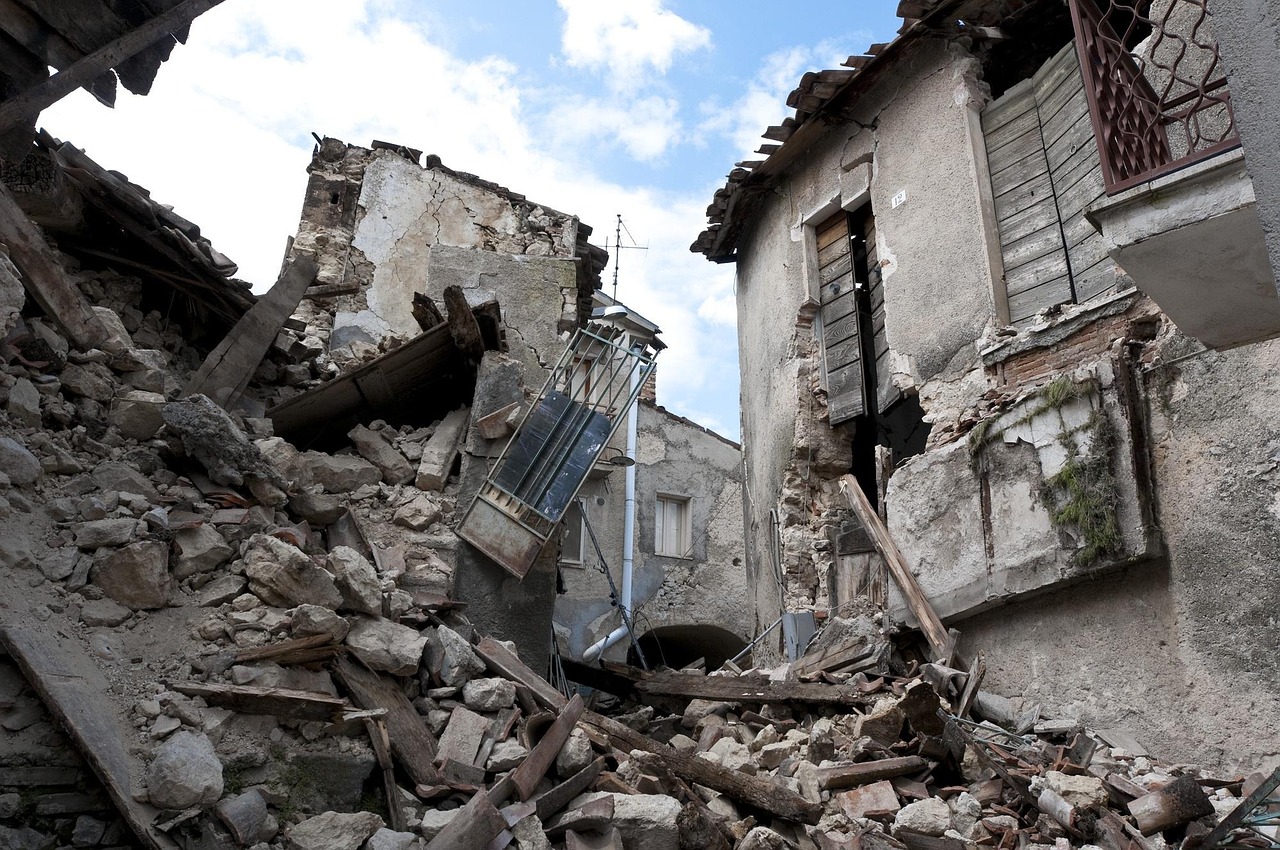
Buildings collapsed, and plumes of smoke billowed in the sky after the disaster; of the approximately 100,000 people, some awaited rescue, while others had already died, never waking from their dreams.
Couples were embracing each other, and children were hugging their plushies; they had been rescued, all their body parts were intact and unharmed. However, the blood flow had stopped, and livor mortis had formed around their faces and bellies, surrounded by suffocating dust, and they lay dead in their dusty beds.
Yet, fortunately, a few families are being pulled one by one from under the rubble of collapsed buildings, having lost their arms and legs.
No, it is not an extract from a movie nor a fictional apocalypse novel, but a lived reality.
Have you ever actually felt close to death? This experience was not distant for me personally. I felt the feeling that you are going to die during the time, devastatingly shaken by the tormenting and abnormal seismic waves, screaming at my fullest for my dad to come near my bed to feel his heartbeat once more, and to overcome the strength of seismic waves of consecutive 7.7 and 7.6 earthquakes.
Luckily enough, we saw the day after, without having any serious damage to our building. However, we were still completely in shock, having lost relatives, and we tried to reach out to our loved ones. Right after two consecutive earthquakes occurred, my family and I continued to follow the news for updates on earthquakes in other southeastern cities of Turkey. It was the rare moment I felt so privileged because I was able to clearly “see”, “breathe”, and “eat”, whilst a girl at the same age as me living only 2 kilometres away, shouting to rescuers from under the rubble: “I am still alive.”
I questioned so many times: Frequent earthquakes of comparable magnitude happen every year in Japan as well, so why does Turkey lose tens of thousands of people and again never learn anything from it, but Japan stays resilient in each earthquake? This again leads us to ask political questions because the corrupt “politics” are even embedded in natural disasters.
Turkey has seen lots of damaging earthquakes before, such as the 1999 Marmara Earthquake, in which at least 18,000 people died, and in the 2011 Van earthquake, more than 60,000 individuals were left homeless. Even though the same decades-long Turkish government seemed to have urban redevelopment programs and funds to renovate damaged buildings, and relocate middle and low-income Turkish citizens to new buildings under “The Urban Transformation Act”, also known as “the Disaster Law”, it was considered that the Government failed to do so because, practically, its application was profit-oriented and discriminatory.
It disregarded the rehabilitation of urban development and the well-being of citizens; instead, the government prioritised privatisation and market-driven approaches to the construction of new buildings, leading to a lack of consistent checks and a neo-liberal construction sector, which only functions by profit-driven mechanisms.
A diverse amount of legislation has been passed by the AKP government throughout the years, such as the ‘Construction Amnesty Policy’ that legalises illegal or non-compliant buildings for a fee or tax, allowing building owners to ignore safe upgrades, and much more. This paved the way for tragic consequences in the February 2023 Earthquake, which led more than 50,000 die and millions to need shelter, food, and sanitation.
Ultimately, Turkey is a country located on a fault line that carries high risks in all cities. Unfortunately, earthquakes will continue to occur, and the destructive ones will persist for ages to come. The profit-driven legislation of the AKP government was aimed at creating a network of elites and attracting voters. Additionally, their distinct pattern of neoliberalism through the construction and urbanisation sector will remain subtle in front of the citizens’ eyes. To combat this authoritarian neoliberal urbanism that lacks inspection, which puts over 86 million people’s lives at stake, I find effective solutions in the representation of citizens, political consciousness, education, and, of course, collective actions.
Disclaimer: This article was entirely human-written without the use of Artificial Intelligence.
Sources:
- University of Cambridge. “Turkey-Syria Earthquakes: Deficiencies in Building Structures and Construction Shortcuts Were Main Cause of Casualties.” Research News, University of Cambridge, February 5, 2024. https://www.cam.ac.uk/research/news/new-report-into-turkey-syria-earthquakes-uncovers-deficiencies-in-building-structures-and
- Ungvarsky, Janine. “2011 Van Earthquake.” EBSCO Research Starters. EBSCO, 2023. Last accessed 29 December 2025. https://www.ebsco.com/research-starters/earth-and-atmospheric-sciences/2011-van-earthquake
- Güvenç, Muna. 2024. “Off the Rails: The Failure of Turkey’s Twenty-Year-Long Construction Frenzy.” International Planning Studies 29 (4): 366–78. DOI: 10.1080/13563475.2024.2429602