From brave heroes to the real implications of warfare
What we can learn from Francisco Goya’s revolutionary approach to painting war scenes
To see the paintings mentioned in the following article, follow these links:
- The Third of May 1808 – Francisco Goya
https://www.museodelprado.es/en/the-collection/art-work/the-3rd-of-may-1808-in-madrid-or-the-executions/5e177409-2993-4240-97fb-847a02c6496c - Napoleon Crossing the Alps – Jacques-Louis David
https://smarthistory.org/jacques-louis-david-napoleon-crossing-the-alps/
Fear sparks on the faces of the people standing in front of the executors. The enormous light box on the ground enlights the victims and draws our attention to their graphic facial expressions. Opposing them, robust, thick, diagonal lines form a line of uniformed men, rifles drawn and ready to pull the trigger. The dark browns contrast with the vivid reds, creating an urgency that makes you want to run and hide. Though the figure dressed in white might look heroic, accepting his fate courageously, his fatal end is inescapable. And like this depiction of terror, many similar bloody executions of resistance fighters followed. Francisco Goya’s The Third of May 1808 portrays the massacre that took place in Madrid, preceded by a rebellion against Napoleon’s army at the beginning of the Peninsular war.
In an age characterised by romanticism, Francisco Goya’s realistic depiction of war, including the bloodshed and terror, was uncommon. Goya’s contemporaries preferred heroic images that showed the victories and triumph following a successful battle. For example, Jacques-Louis David’s Napoleon Crossing the Alps. The future emperor is sitting on a strong and clean white horse, even the tiniest spat of battlefield mud can’t be found on the animal or its rider. While this image of a pristine warrior might be comfortable to look at, in reality this comfyness in war is nowhere to be found. This is exactly what The Third of May 1808 is trying to tell us. Goya’s goal to portray the reality of the massacre, instead of putting yet another historical figure on a pedestal, changed art history for good. The realistic painting is by many art historians considered as the first modern painting. The rough brush strokes differ from his colleagues’ detailed drawings, and more importantly, the decision to paint the raw reality is new for this age.
Next to the revolutionary meaning The Third of May 1808 has in art history, the turn from portraying warfare as heroic to focussing on its destructive and fatal implications, can be considered as the beginning of an anti-war sentiment. A decade later, during World War I, artistic bitterness characterised the era, and young painter Paul Nash wrote that his goal was to be a “messenger who will bring back word from the men who are fighting to those who want the war to go on forever.” This required artists to capture the suffering and cruelties of the battlefield, more explicitly showing wounds with blood, bones and muscles exposed.
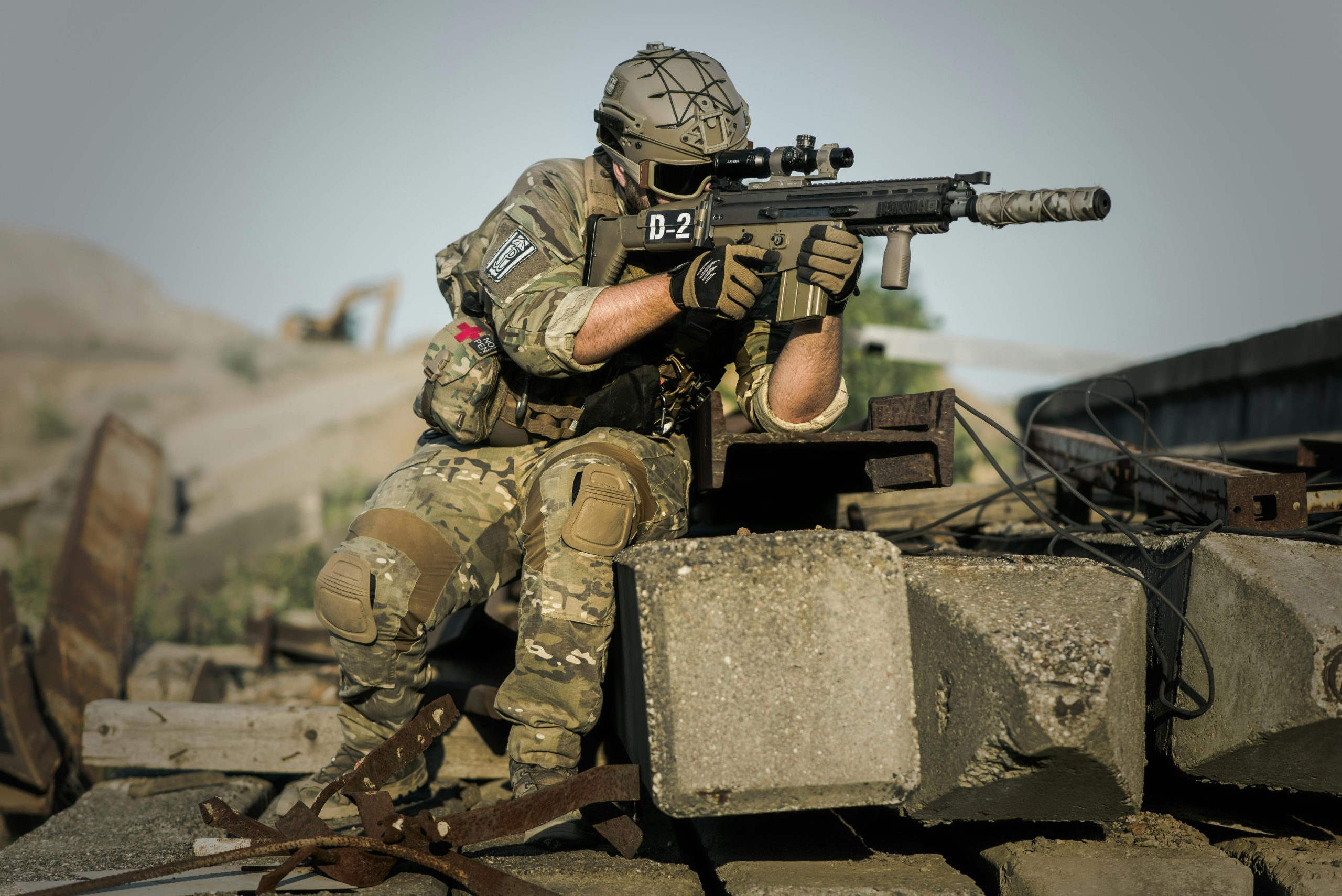
This movement of condemning war went beyond artists and their paint brushes; since the second half of the 20th century, little to no war casualties in post-heroic Europe are tolerated. Though we still live in the post-heroic era in Europe, Russia’s invasion in Ukraine has made calls for rearmament more frequent. Because Russia is more and more often framed as an unpredictable and violent Eastern neighbour of Europe, people feel the threat of war coming closer. The need to defend ourselves has changed the public opinion on armed forces; the support for expanding our military forces keeps growing in the Netherlands. According to research by Tine Molendijk in Sage Journals, this pro-military stance increased the popularity of fairytale-like narratives of war. The fact that warviolence is an abstract affair in our Western European societies, where wars haven’t been fought for more than 80 years, enhances the persistence of caricatural perceptions of war. Molendijk compares societal narratives of war with fairytales because of the prevalent us/them structure and the evil villains versus superheroes relations that often appear in our visions of warfare. These notions result in a narrative that justifies our violence, while portraying the enemy as inherently evil. Additionally, it dehumanises both sides, viewing the opponents as animals while our soldiers are held up to superhuman standards. Although these fairytale narratives might seem harmless and far away from reality, they do have real implications. For example, the cancellation of our opponents materialised in the boycotting of Russian culture – such as Tchaikovsky’s music, and the celebration of videos showing dying Russian warriors online. Considering these instances, it is important to keep the consequences of armed conflicts in mind, even if they might seem distant at first.
In a way, the fairytale narratives that have reappeared as a reaction to the Russian invasion are similar to Napoleon crossing the Alps. Both create a distorted image of the course of wars, while ignoring the destructive and fatal implications of violence. Following this idea, our current environment of pro-militaristic societal narratives of war based on overgeneralisations and othering might blur our vision of reality. Therefore, in the end, we shouldn’t forget to remember the implications of war that Goya tried to show us in The Third of May 1808, in order to protect us from unnecessary violence.
Disclaimer: This article was entirely human-written without the use of Artificial Intelligence.
Further reading: